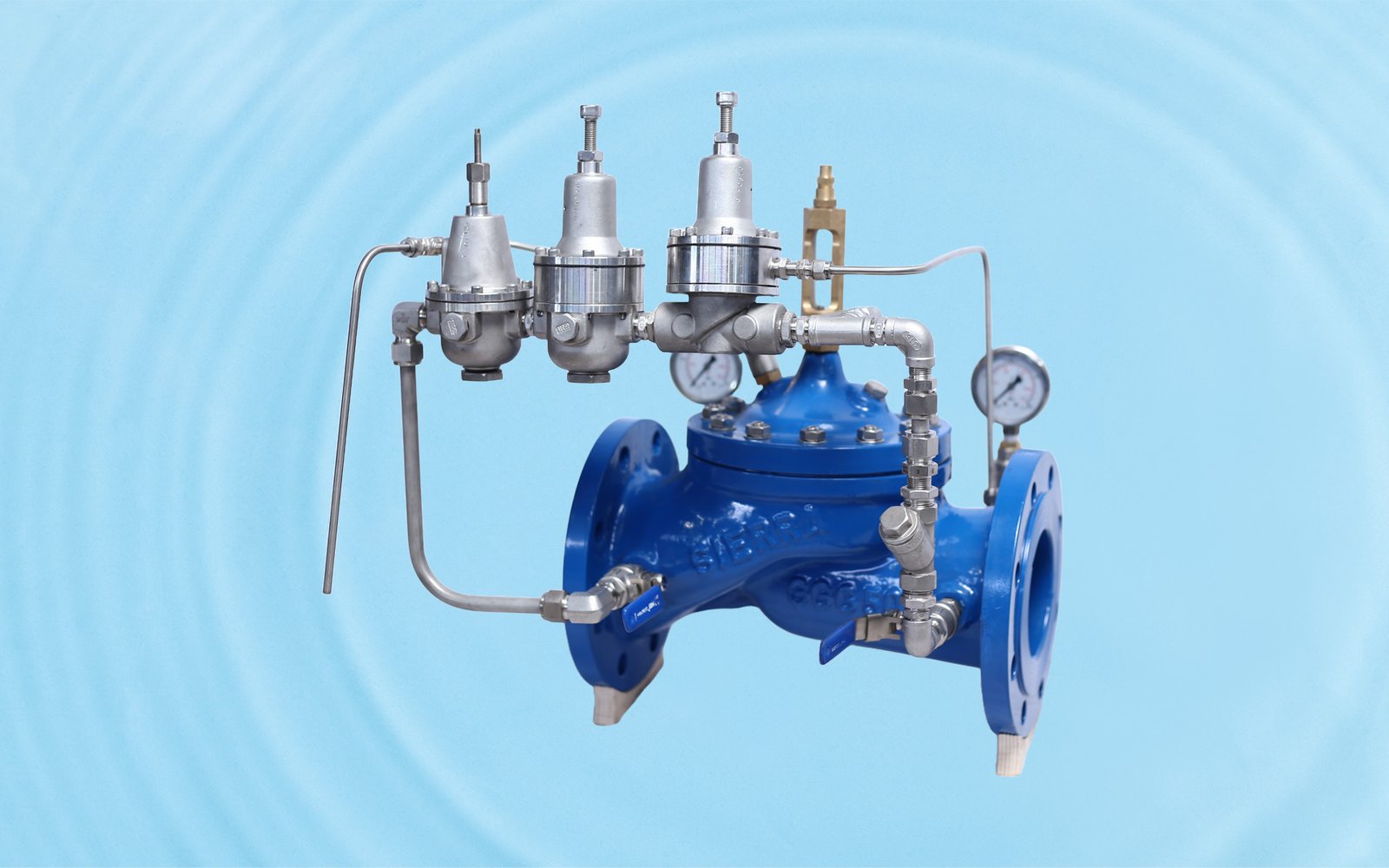
Pressure reducing, Sustaining and Flow Limiting Valves
The model 30-1200 Combination pressure Sustaining and flow limiting Valve is a hydraulically operated, diaphragm actuated, control valve. When installed in line, they sustain minimum back pressure thus prioritizing pressure zone, preventing line emptying, and it prevents excessive flow by limiting flow to a preselected maximum rate.
The Sustaining is a normally closed valve that is manually adjusted to open once upstream pressure reaches a preset value. The valve opens to maintain upstream pressure at that value. Once upstream pressure falls below the set point the valve closes slowly to a drip tight position. Flow limiting pilot prevents excessive flow by sensing the pressure differential across the specially sized orifice plate. The orifice plate is factory calibrated based upon minimum and maximum flow rate requirements.
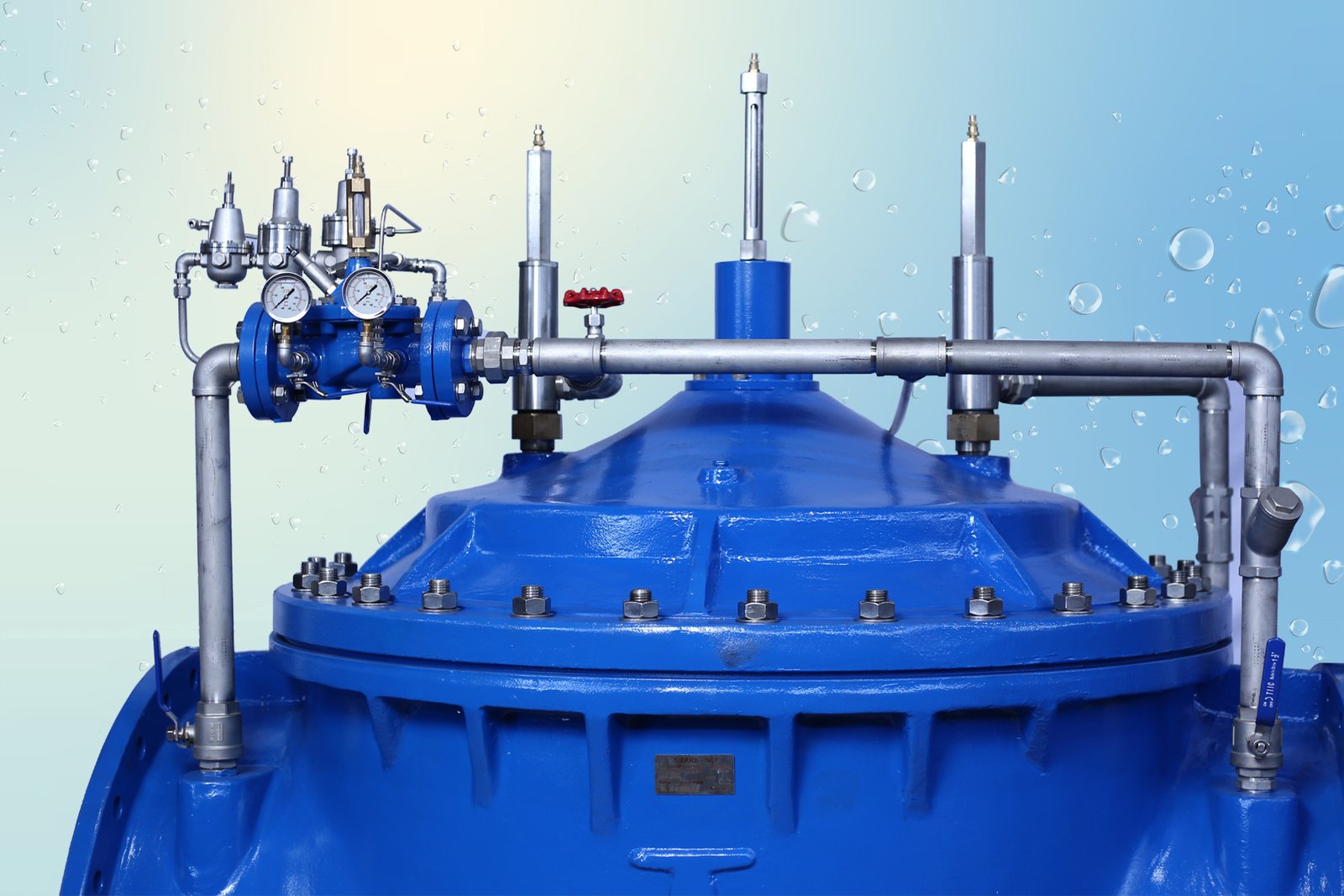
Operating Principals of ACVs
Valve Closing: When the pilot closes water is trapped inside the bonnet and the main valve disc will be forced to close.
Valve Opening: When the pilot opens water is released from the bonnet allowing the main valve disc to open.
Valve Modulating: The main valve will mimic the small pilot valve. When the latter partially closes the main valve does the same and vice versa. The pilot valve reacts to a change in external signal received from the system. This signal might cause the pilot valve disc to partially close (hence closing the main valve) or to partially open.
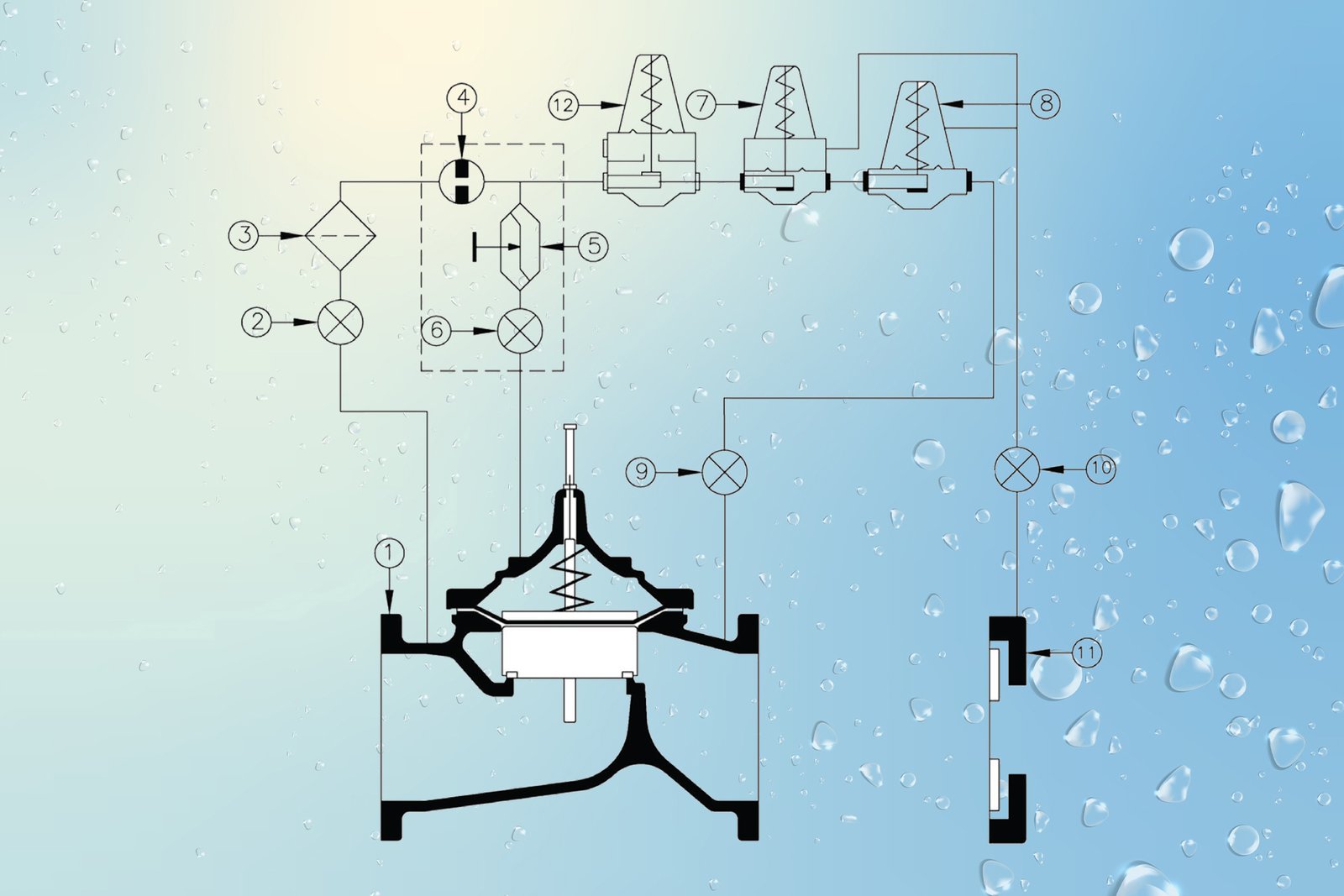
Material Standards
1. Body —— Ductile Iron EN-GJS-500/7 Or Ductile Iron EN-GJS-400/12
2,6,9,10. Isolation valve —— Nickel plate copper alloy (Optional SS316)
3. Strainer —— Stainless steel SS316
4. Restriction —— Stainless steel 316
5. Needle Valve —— Stainless steel 316
7. Pressure Reducing Pilot —— Stainless steel 316
8. Flow Control Pilot —— Stainless steel 316
11. Orifice Plate —— Stainless steel 304
12. Pressure sustaining Pilot —— Stainless steel 316