Sierra Manufacturing Solutions: Integrated Valve Production from Pattern to Pressure Test
Sierra Manufacturing Solutions delivers a complete industrial valve manufacturing workflow built around precision, repeatability, and quality control. The production chain covers every major stage required to transform raw materials into reliable finished valves, beginning with pattern development and foundry work, moving through machining and protective coating, then ending with assembly and hydrostatic testing. This integrated structure allows Sierra to control product quality at each step, reduce production risks, and maintain consistent performance across a wide range of valve applications.
Pattern Making Operations
Pattern making is the starting point of the manufacturing cycle because it defines the geometry that will later be transferred into the cast metal components. At Sierra, pattern making is not treated as a simple preparatory step. It is a controlled engineering activity that directly affects casting accuracy, dimensional stability, and final machining allowance.
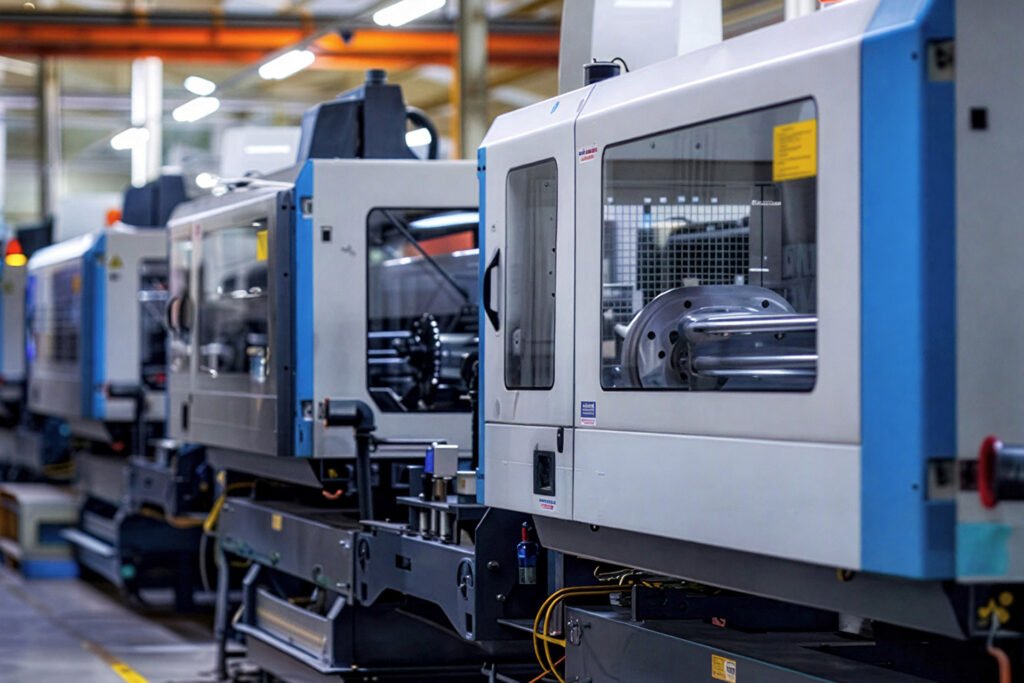
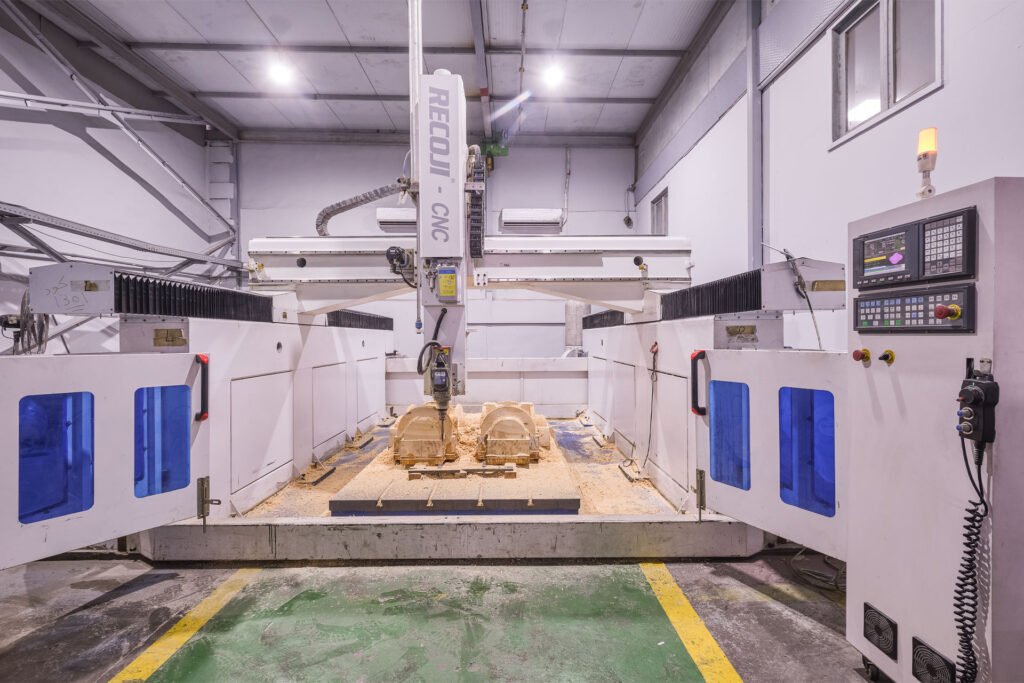
The operation includes conventional pattern development as well as CNC router technology for high-precision pattern production. CNC routers improve consistency by producing complex shapes with repeatable dimensions and cleaner surface finishes than manual pattern fabrication alone. This is especially important for valve bodies, bonnets, covers, and other components that require accurate cavity formation in the mold.
Using CNC routers in pattern making gives Sierra several manufacturing advantages. It shortens lead time for new designs, allows quick pattern modification during product development, improves dimensional accuracy, and supports more efficient production of both standard and custom valve configurations. For customers, this means faster transition from design to production and better control over final component quality.
Casting Operations
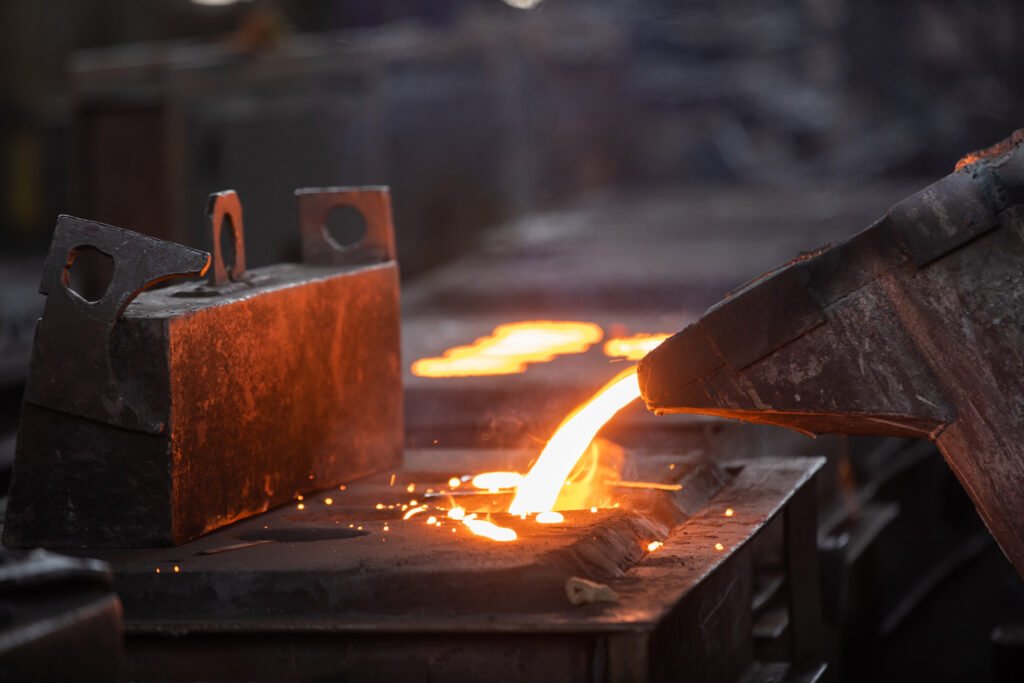
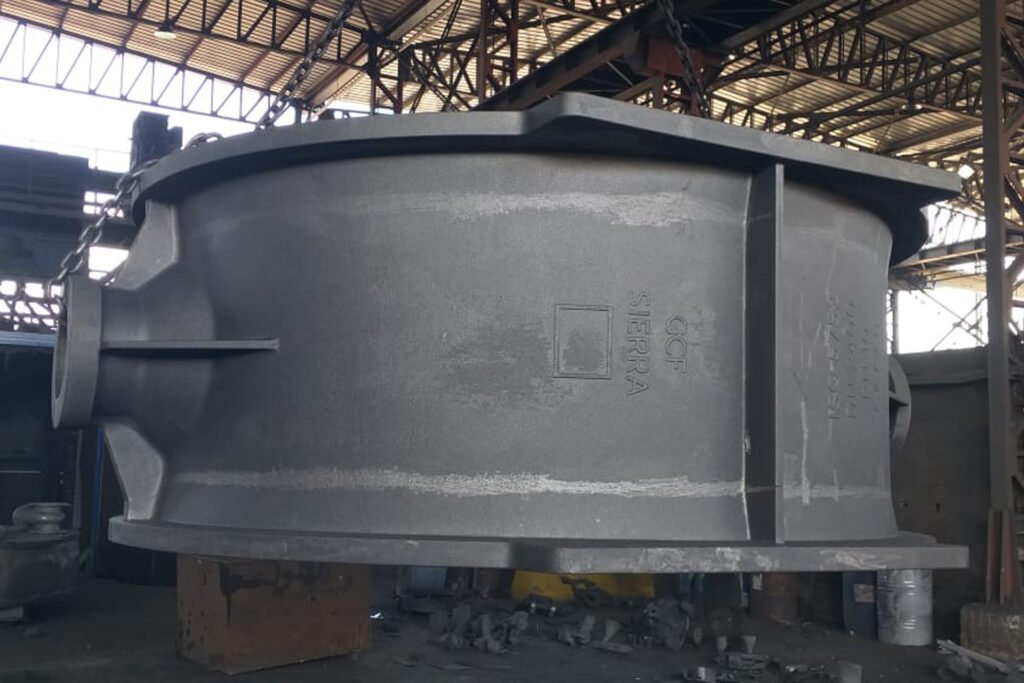
Casting is the stage where valve components begin to take their final metal form. Sierra uses multiple casting methods to match process capability with product design, material requirements, and production volume. These include furan molding, bentonite molding, and lost foam casting.
Furan Casting
Furan molding is used where high dimensional accuracy, good mold strength, and strong surface quality are required. This process is well suited for complex valve shapes and medium to large castings. The furan system enables stable mold formation and supports reliable production of components that later require accurate machining and sealing performance.
For valve manufacturing, furan casting is valuable because it helps maintain tight casting tolerances and produces sound cast structures that reduce downstream machining corrections.
Bentonite Casting
Bentonite molding remains an effective solution for many foundry applications because of its practicality, cost efficiency, and adaptability to repetitive production. In valve manufacturing, bentonite systems can be suitable for components where production speed and economical mold preparation are important.
This method gives Sierra flexibility in handling different production volumes while maintaining reliable casting output. It also supports consistent mold performance in routine foundry operations.
Lost Foam Casting
Lost foam casting is applied when part geometry is more complex and when reducing mold assembly constraints becomes beneficial. In this process, the foam pattern is replaced by molten metal during pouring, allowing the creation of intricate forms with fewer parting-line limitations.
For valve components, lost foam casting can help simplify the production of complicated external and internal geometries. It also supports cleaner shape reproduction and may reduce the need for some pattern assembly steps compared with traditional molding approaches.
By operating across these three casting methods, Sierra can select the most suitable process for each valve design instead of forcing all products into one manufacturing route.
Machining Operations
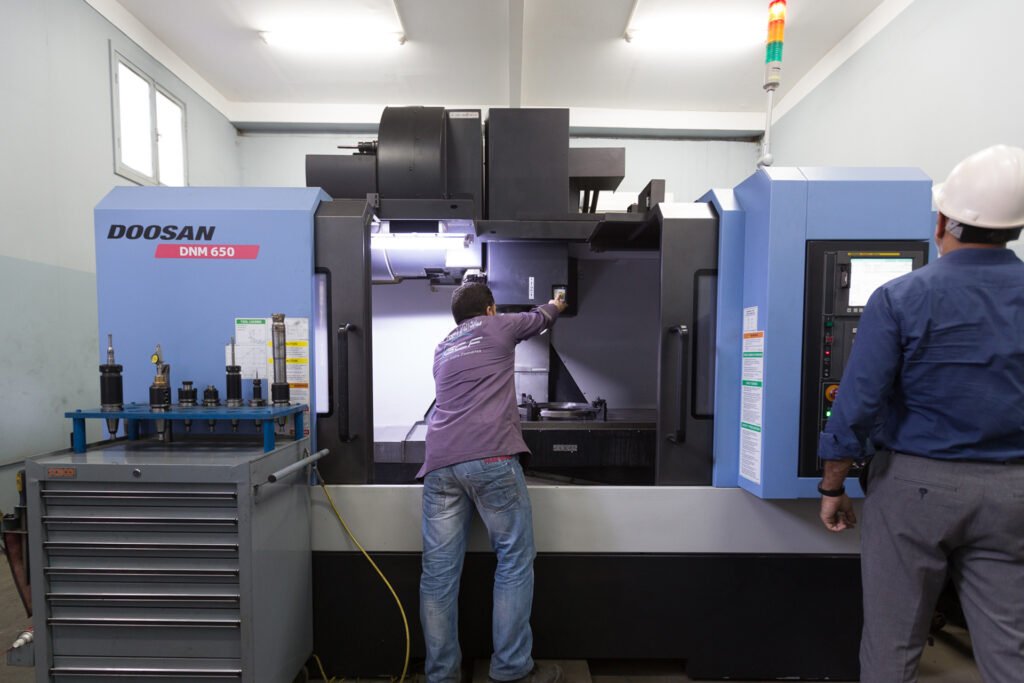
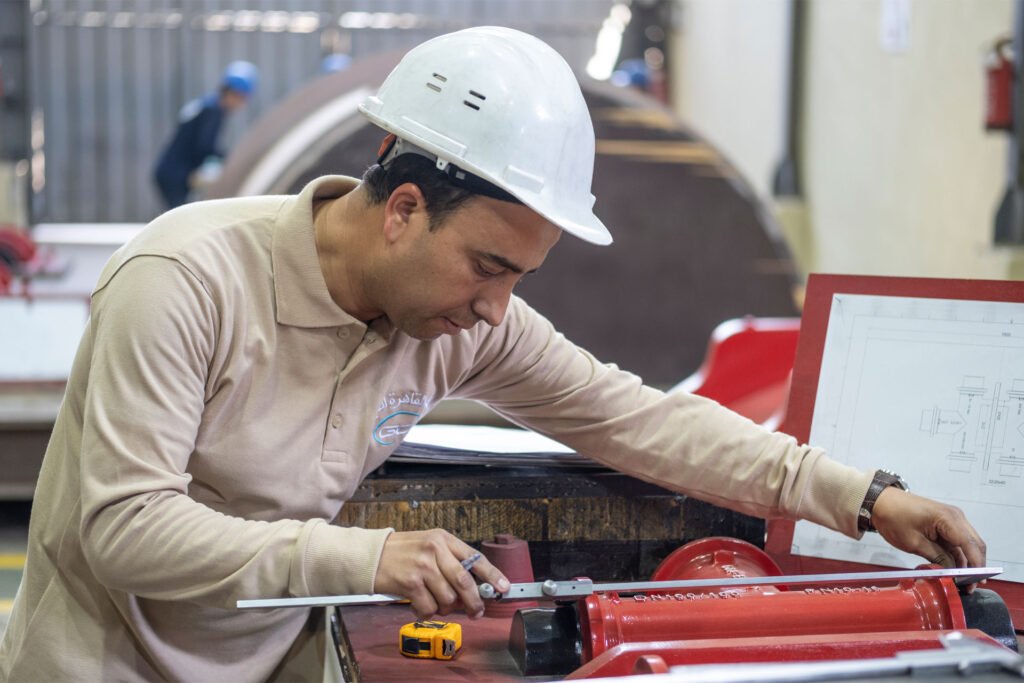
After casting, valve components move into machining, where dimensional precision becomes critical. This stage converts raw castings into functional pressure-containing and sealing components. Sierra’s machining operation uses different types of CNC machines to achieve the required tolerances, alignment, and surface finish.
These CNC machines support operations such as turning, milling, drilling, boring, threading, facing, and precision finishing. Each machining step is executed to ensure that critical valve features meet design requirements, including flange faces, seat pockets, stem bores, guide surfaces, stuffing box areas, and cover joints.
The use of multiple CNC machine types gives Sierra the ability to handle a broad mix of component sizes and geometries. It also improves production flow by assigning each part to the most suitable machine platform. This results in better cycle control, reduced human error, and more stable quality from batch to batch.
In valve manufacturing, machining is not only about reaching nominal dimensions. It is also about ensuring concentricity, sealing integrity, smooth operation, and proper fit between assembled parts. Sierra’s machining operations are positioned as a key link between good casting quality and reliable final valve performance.
Valve Coating Operations
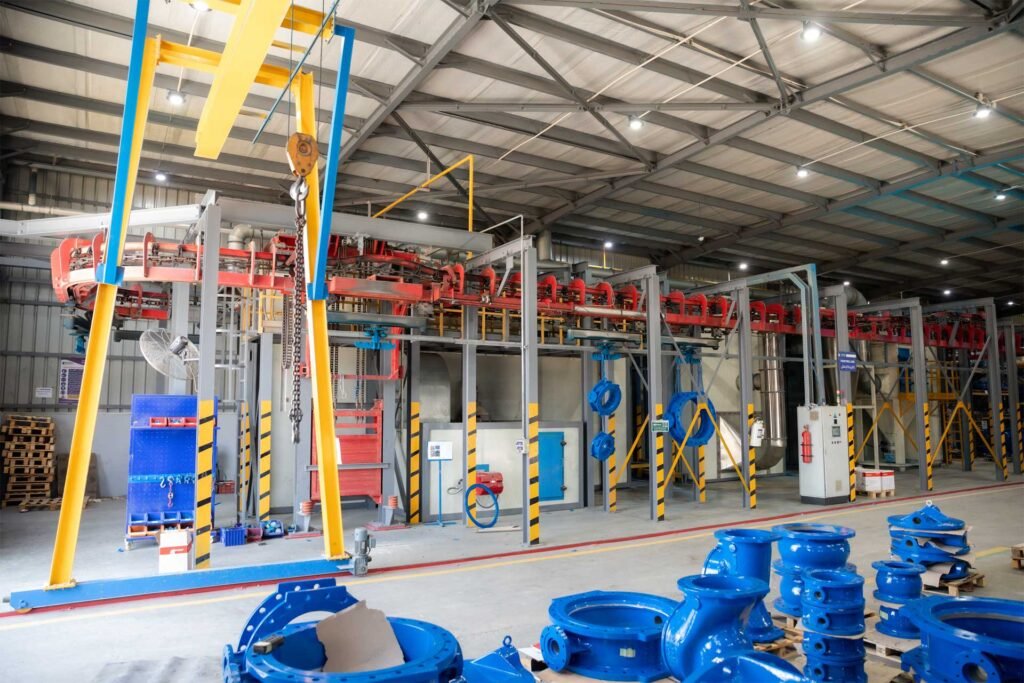
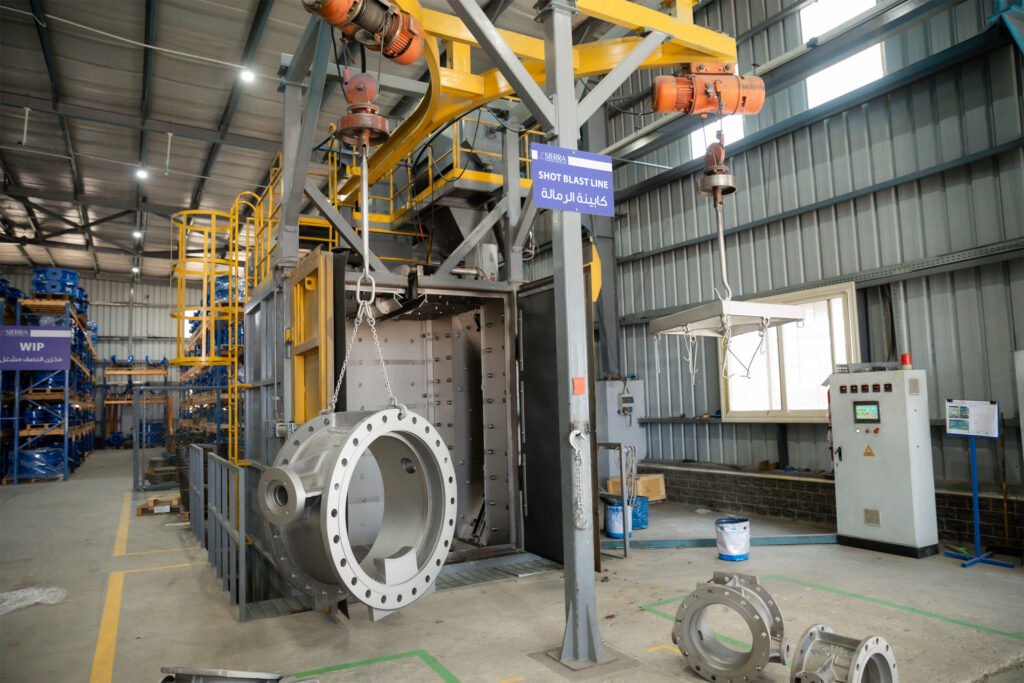
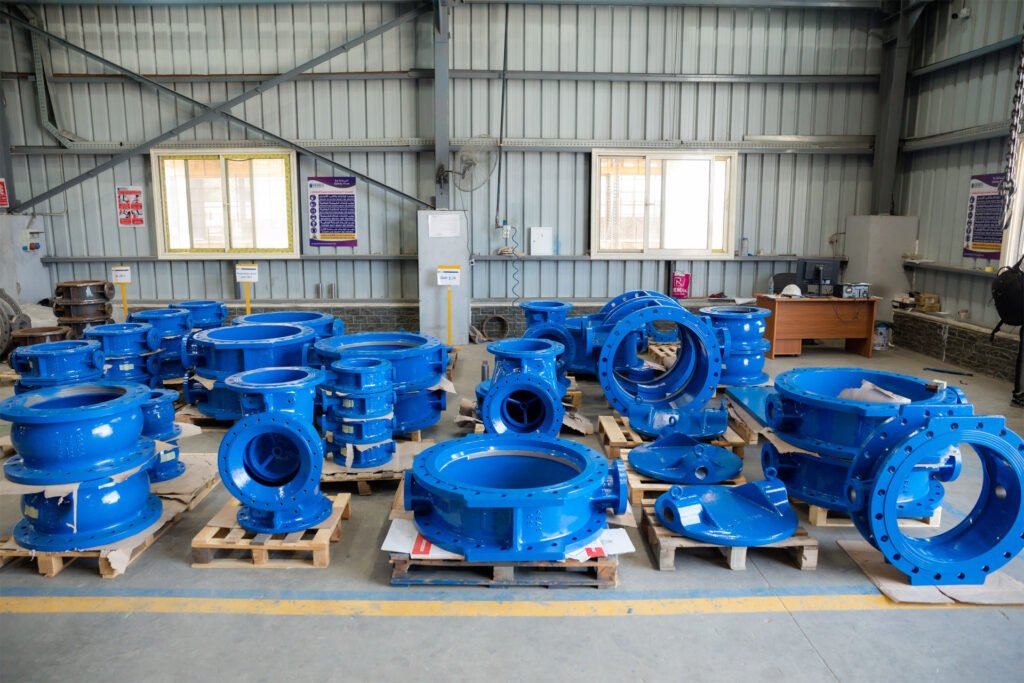
Protective coating is essential in valve manufacturing because industrial valves often operate in aggressive environments involving moisture, chemicals, abrasion, or atmospheric exposure. Sierra includes dedicated valve coating operations to protect metal surfaces and improve long-term service life.
Among these processes, powder coating plays an important role. Powder coating provides a durable, uniform protective layer that can improve corrosion resistance, enhance appearance, and support product longevity. The technique is especially valuable when a strong, controlled finish is needed across external valve surfaces.
A proper coating operation involves more than paint application. It requires surface preparation, controlled application parameters, curing discipline, and inspection of the final finish. Sierra’s coating workflow is therefore part of the manufacturing quality system rather than a cosmetic afterthought.
For industrial valves, coating quality affects both durability and customer confidence. A well-coated valve reflects process control, protects the product during storage and service, and contributes to lower maintenance demands over time.
Valve Assembly Operations
Assembly is the stage where individual manufactured parts become a functioning valve. Sierra’s valve assembly operations bring together machined and coated components under a controlled process designed to ensure correct fit, movement, sealing, and operational reliability.
This stage typically includes installation of seats, discs, wedges, gates, stems, shafts, bearings, seals, gaskets, packing elements, bolting, and operating mechanisms depending on valve type. Each assembly sequence must be performed with attention to orientation, torque discipline, alignment, and cleanliness.
A reliable assembly operation is critical because even high-quality castings and accurately machined parts can fail in service if they are assembled incorrectly. Sierra’s approach to assembly therefore focuses on process consistency, part verification, and controlled workmanship.
Assembly also serves as the final internal checkpoint before testing. At this point, the valve’s mechanical movement, closure behavior, and physical integrity can be verified before pressure testing begins.
Hydrostatic Testing of Valves
Hydrostatic testing is the final validation stage that confirms whether the manufactured valve can safely perform under pressure. Sierra conducts hydrostatic testing in accordance with ISO 5208 and EN 12266, two recognized standards for valve pressure testing.
This testing stage is essential because it verifies the integrity of pressure-retaining parts and the effectiveness of valve closure. It is the point where manufacturing quality becomes measurable under simulated service conditions. A valve that passes hydrostatic testing demonstrates that casting soundness, machining accuracy, assembly quality, and sealing performance have all been brought under control.
Testing in line with ISO 5208 and EN 12266 reflects a structured approach to acceptance criteria and inspection discipline. It supports customer assurance by showing that the finished valve has been evaluated against recognized testing requirements rather than informal shop judgment.
For Sierra, hydrostatic testing is not just an end-of-line routine. It is the final confirmation that the full manufacturing sequence has delivered a valve ready for dependable field performance.