Research & Development at SIERRA: Engineering Solutions, Not Just Products
At SIERRA, research and development is not a support activity. It is the engineering system behind how we convert operating problems into reliable, manufacturable, and validated industrial solutions. We do not start with a standard product and attempt to fit it into every application. We start with the service condition, the performance target, and the customer requirement, then build the solution through a structured R&D process based on Identify, Design, Optimize, and Validate.
Why R&D Matters in Industrial Valve Engineering?
In water and industrial systems, valve performance affects leakage control, pressure integrity, maintenance intervals, hydraulic efficiency, corrosion resistance, and long-term reliability. A product that is not engineered thoroughly at the development stage becomes a cost problem in the field.
SIERRA’s R&D methodology is built to prevent that. We convert customer expectations into measurable engineering requirements, develop and refine the concept digitally, optimize its structural and hydraulic performance, validate manufacturability, and then confirm performance through testing and compliance review.
Phase 1: Identify — Defining the Engineering Target
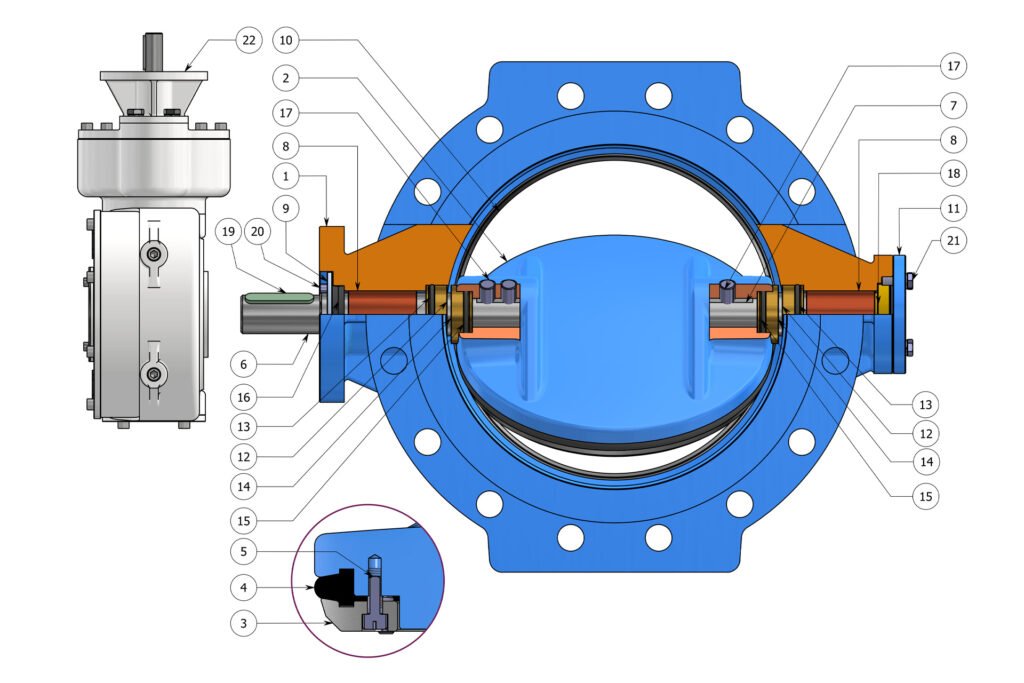
The first step in the SIERRA framework is capturing the Voice of the Customer (VOC) and translating it into Critical-to-Quality (CTQ) parameters. That means turning operational expectations such as reliability, low maintenance, corrosion resistance, and zero leakage into measurable design targets and engineering benchmarks. In the framework example, this leads to a defined product brief for a PN16 Double Eccentric butterfly valve for potable water service, with requirements tied to reliable performance, easy maintenance, corrosion resistance, and safe material selection.
Phase 2: Design — Developing a Manufacturable Digital Prototype
Once the engineering brief is clear, SIERRA moves into concept generation and detailed design. Multiple concepts are developed and screened against the project criteria using structured evaluation methods, ensuring the selected design is aligned with reliability, corrosion resistance, and maintainability targets. The selected concept is then developed into a detailed digital model through:
- 3D CAD modeling
- Tolerance stack-up analysis
- Design FMEA
- Failure-mode correction before production release
At SIERRA, this stage also considers how the product will be manufactured, not only how it will function. Engineering quality depends on both design performance and production consistency.
Phase 2: Advanced Casting Simulation — Designing for Manufacturability from the Start
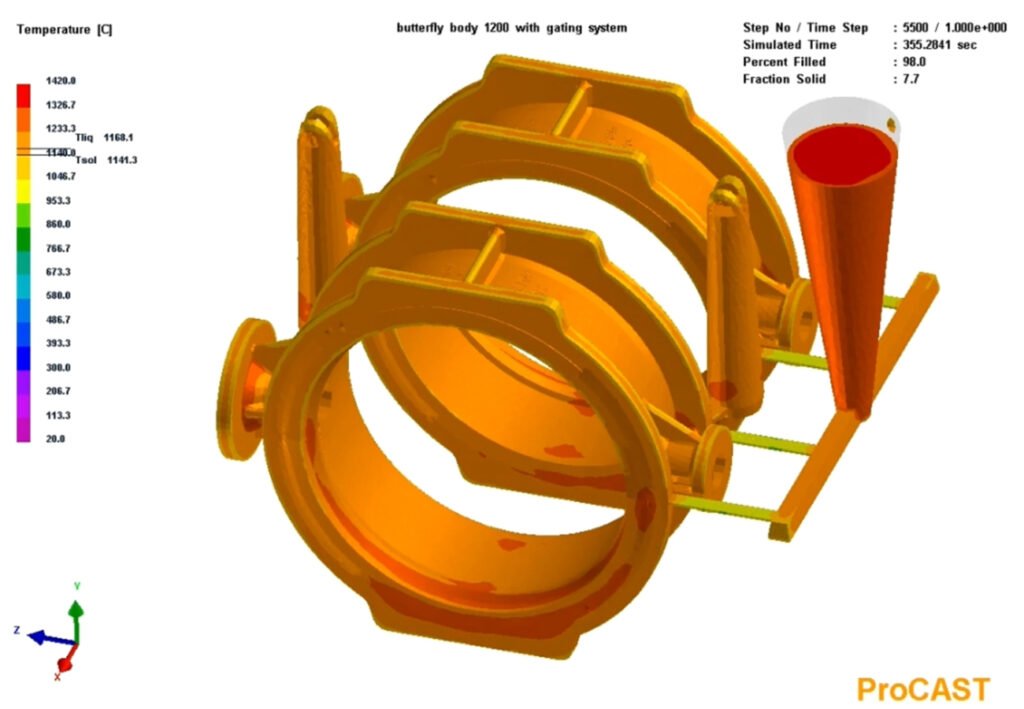
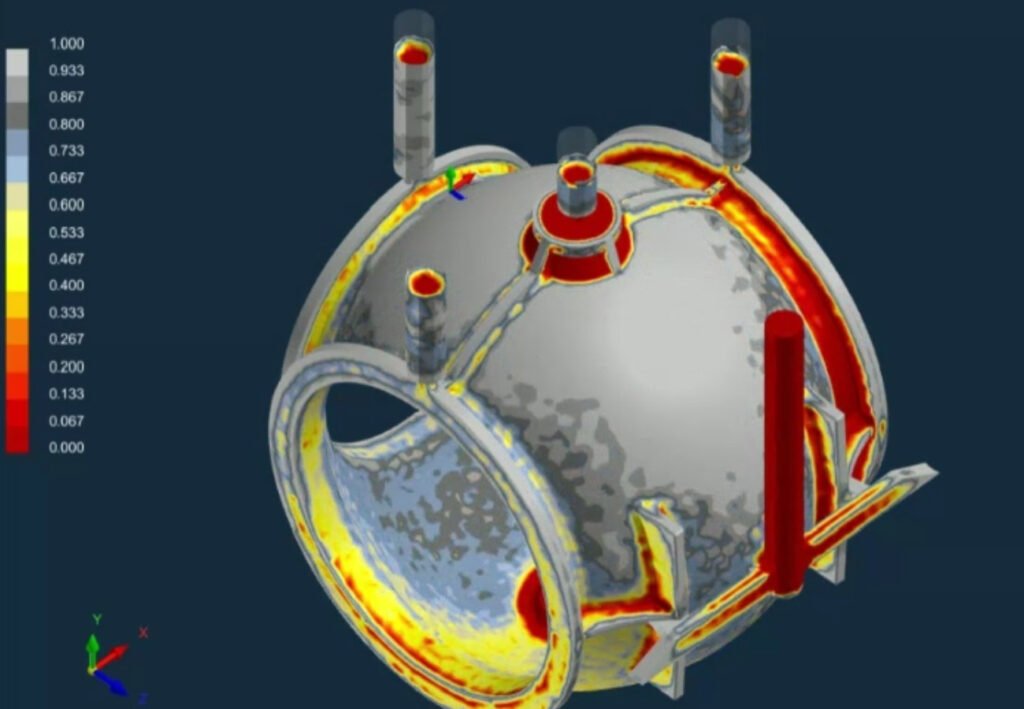
An important part of SIERRA’s R&D capability is the use of advanced casting simulation techniques during product development. Casting simulation allows the engineering team to evaluate how molten metal fills the mold, how the gating and feeding system behaves, and where defects such as shrinkage, air entrapment, incomplete filling, hot spots, or porosity may occur before physical casting begins. This gives SIERRA a major advantage in product development:
- Better casting quality before tooling and production
- Improved gating and riser design
- Reduced defect risk in critical cast components
- Better dimensional and structural consistency
- Faster development cycles with fewer manufacturing trials
Instead of discovering casting problems after production, SIERRA can predict and correct them in the virtual stage. This reduces waste, shortens development time, and improves the reliability of the final valve body and other cast parts. For industrial valves, this matters directly. A structurally sound design still depends on sound casting. Casting simulation helps ensure that the component delivered to machining and assembly matches the engineering intent established in the design phase.
Casting Process Optimization: Advanced casting simulation strengthens this same optimization phase by extending digital validation into manufacturability. It ensures that the cast component is not only strong in analysis and efficient in flow, but also practical to produce with high consistency and lower defect risk.
This means SIERRA optimizes the product at three levels:
- Structural performance
- Hydraulic performance
- Casting and production performance
That combination is what turns a good concept into a production-ready engineering solution.
Phase 3: Validate — Proving Performance in Practice
Digital engineering must be confirmed physically.
In the SIERRA framework, prototypes are manufactured using production-grade materials and processes, then tested to verify pressure integrity, sealing performance, endurance, and compliance.
The validation stage includes:
- Hydrostatic pressure and seat leakage testing to 18 bar per BS EN 1074, with zero leakage reported in the framework example
- Cyclic endurance and seal performance validation over 2,500 cycles under pressurized water exposure
- Material certification audit with traceability and elastomer certification review
This final stage confirms that the product is not only theoretically sound, but operationally proven.
Quality and Certification as Part of the R&D System
R&D at SIERRA works within a broader quality framework. The uploaded framework links product development with ISO 9001:2015 quality management, BS EN 1074 product certification, and raw material traceability requirements.
This matters because performance claims must be supported by controlled processes, documented validation, and material accountability.
What Makes SIERRA’s R&D Approach Different
SIERRA’s R&D system combines customer-focused engineering with digital and physical validation.
We translate customer requirements into measurable CTQs.
We design with CAD, tolerance analysis, and FMEA.
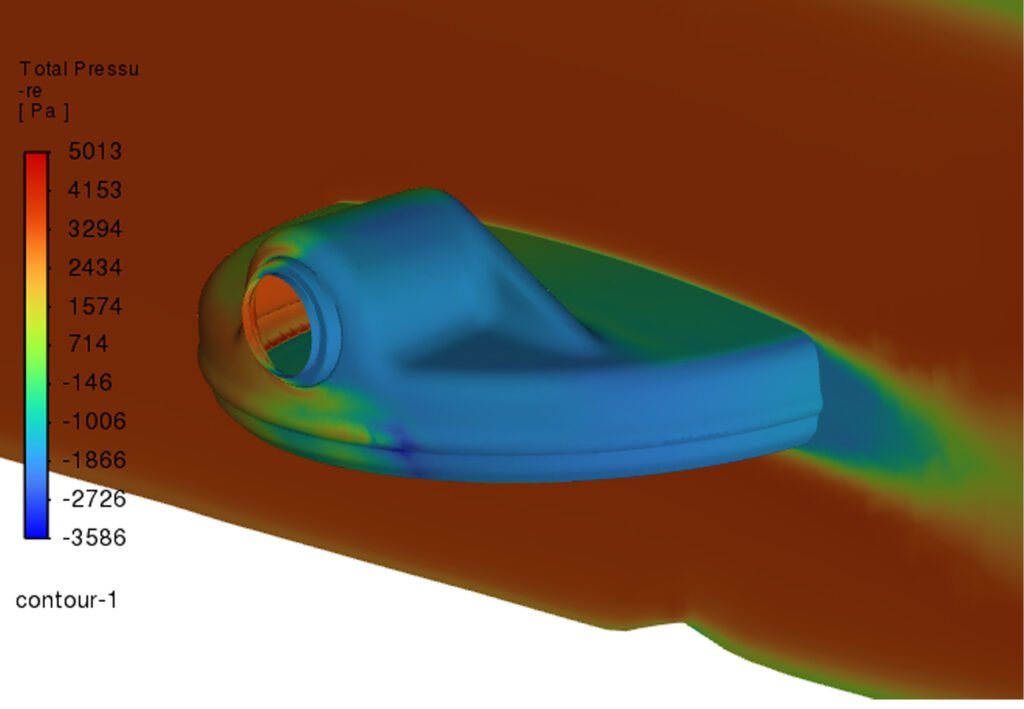
We optimize with FEA, CFD, DOE, and advanced casting simulation.
We validate with prototype testing, endurance evaluation, and certification review.
The result is not just a product that performs on paper. It is a product engineered for service reliability, production consistency, and long-term value in the field.