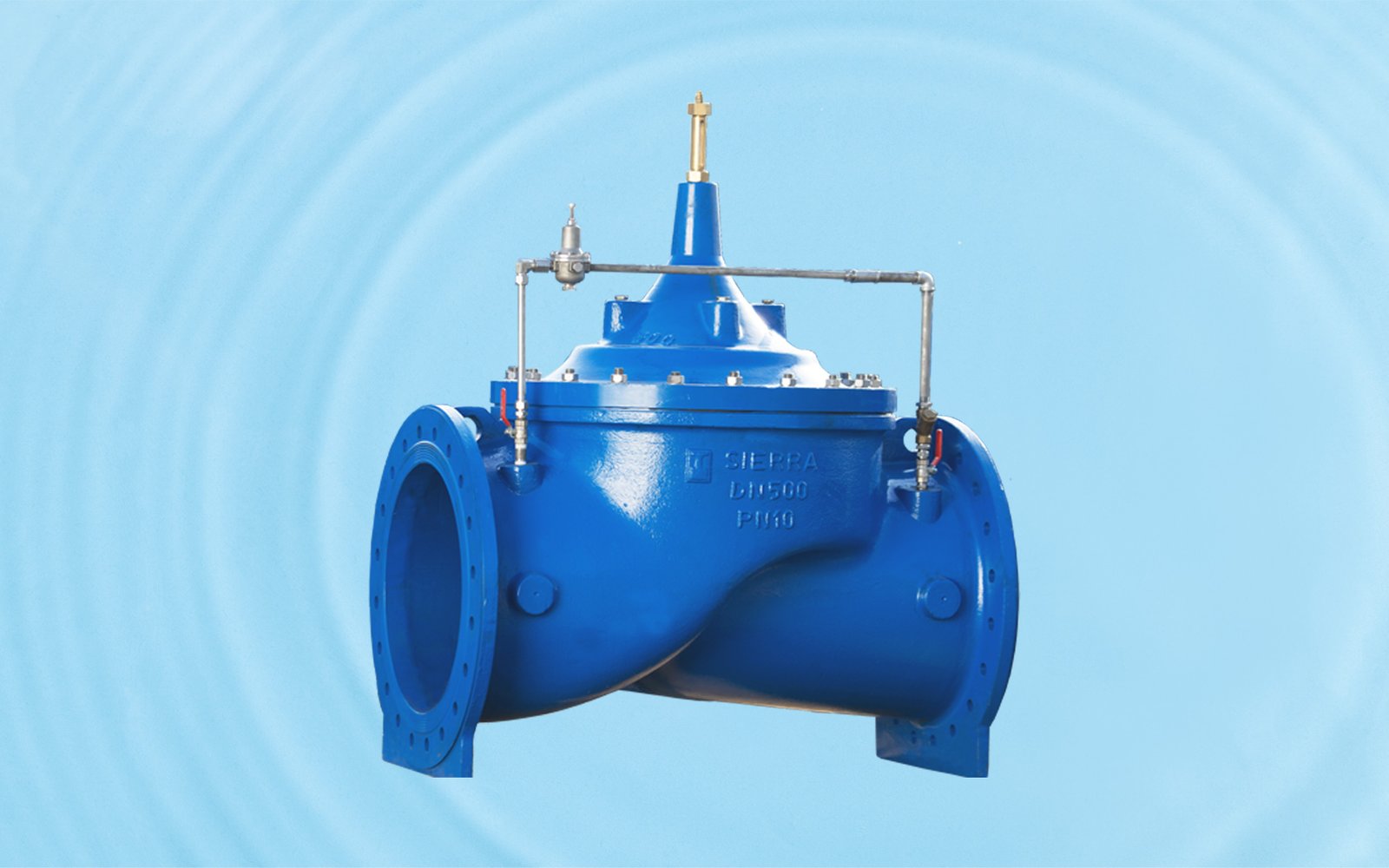
Pressure Reducing Valves Model 1100
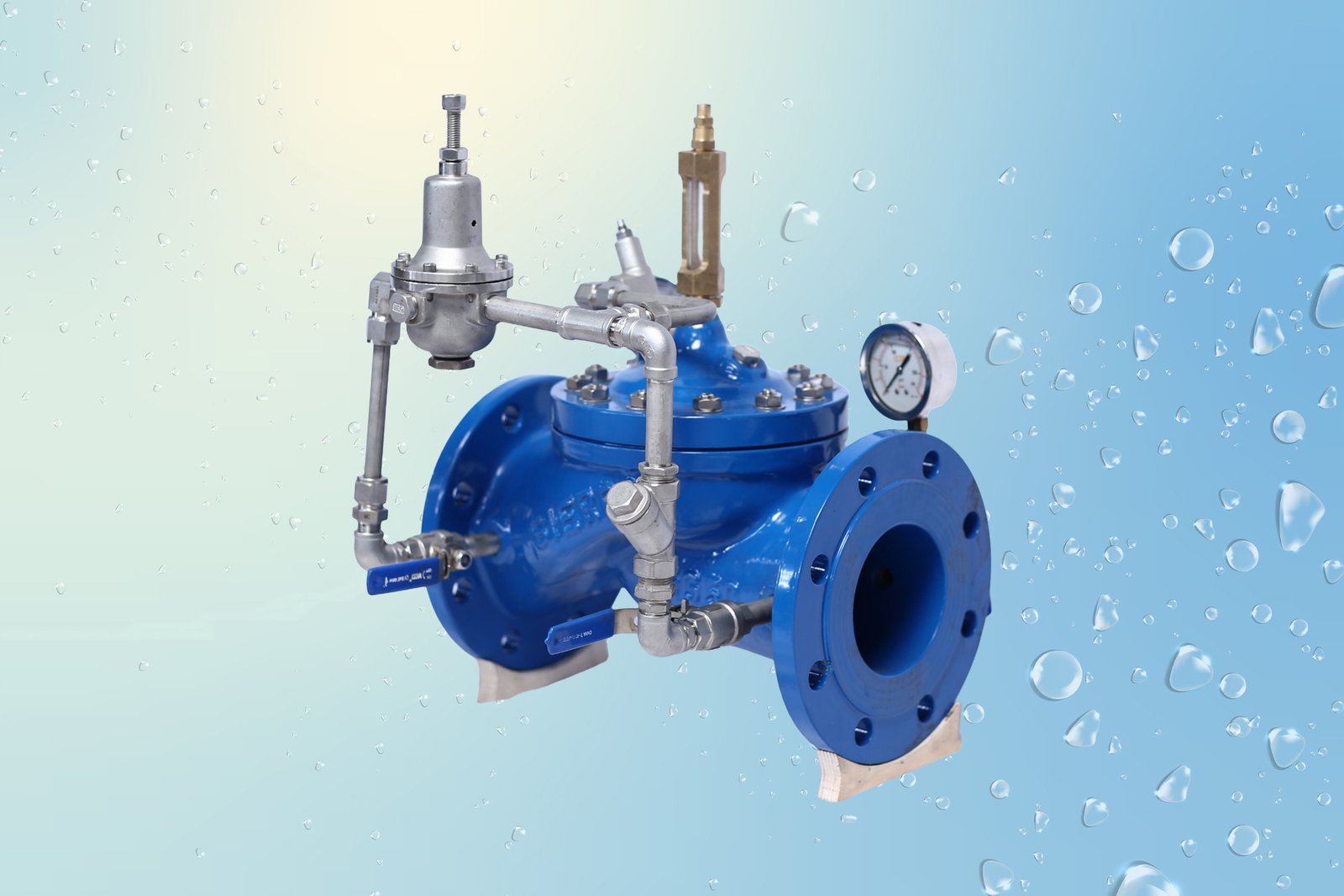
The model 1100 Pressure ACV Reducing Valve is a hydraulically operated, diaphragm actuated, control valve that reduces higher upstream pressure to lower constant downstream pressure regardless of fluctuating demand or varying upstream pressure
The model 1100 reducing valve is a normally open valve that is manually adjusted to open once downstream pressure reaches a pre-set value. Once downstream pressure rises above the set point the valve closes slowly to a drip tight position. The downstream pressure is kept constant within the given flow range (V=4 – 0.4 m/s) with an accuracy of + %5 of the downstream pressure. When there is no consumption, the valve is %100 drop tight. The downstream pressure will rise by approx. 1 bar under conditions between minimum and zero consumption.
Operating Principals of ACVs
Valve Closing: When the pilot closes water is trapped inside the bonnet and the main valve disc will be forced to close.
Valve Opening: When the pilot opens water is released from the bonnet allowing the main valve disc to open.
Valve Modulating: The main valve will mimic the small pilot valve. When the latter partially closes the main valve does the same and vice versa. The pilot valve reacts to a change in external signal received from the system. This signal might cause the pilot valve disc to partially close (hence closing the main valve) or to partially open.
Material Standards
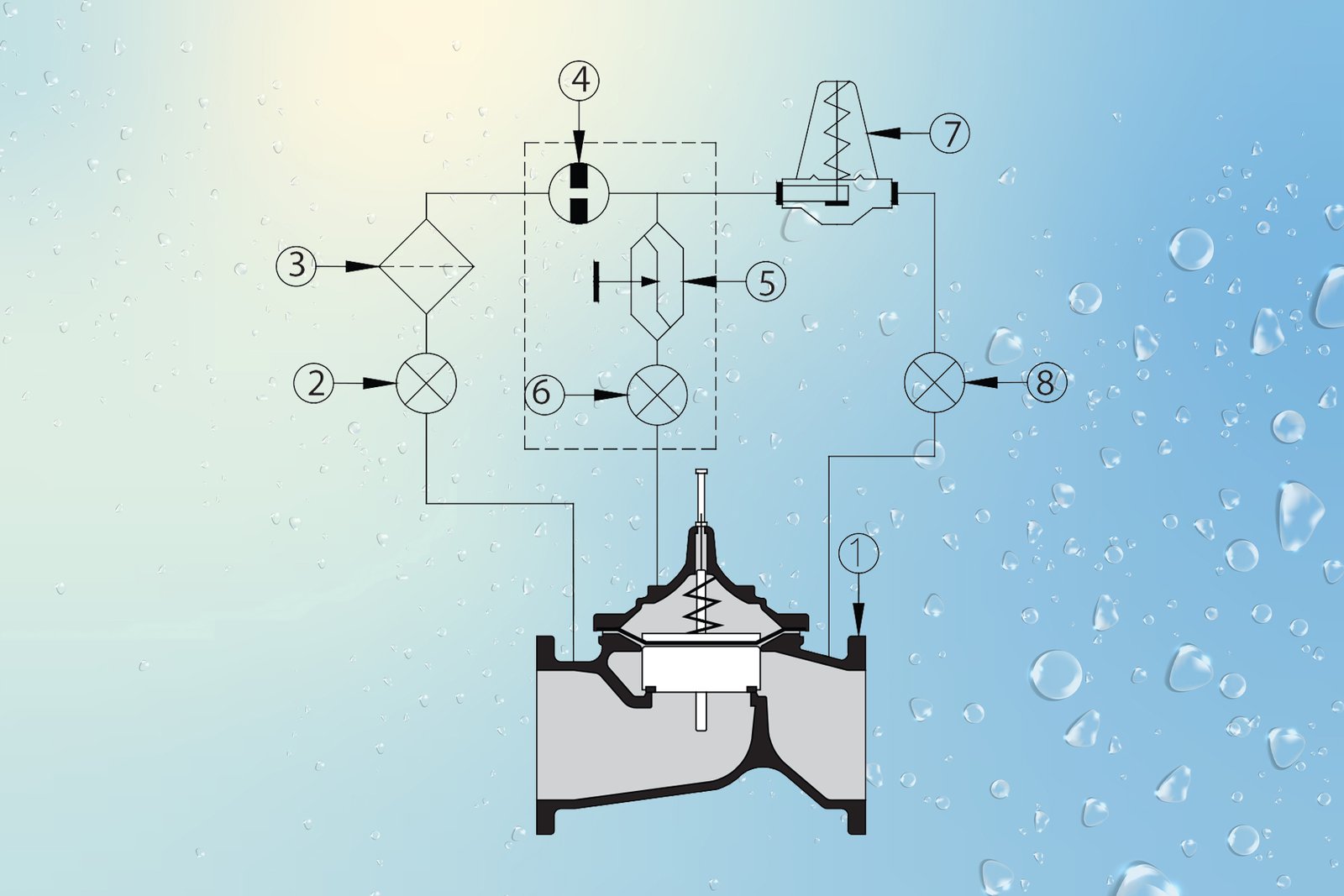
1. Body ——- Ductile Iron EN-GJS-500/7 Or Ductile Iron EN-GJS-400/12
2,6,8. Isolation valve ——- Nickel plate copper alloy (Optional SS316)
3. Strainer ——- Stainless steel SS316
4. Restriction ——- Stainless steel 316
5. Needle Valve ——- Stainless steel 316
7. PRV Pilot ——- Stainless steel 316